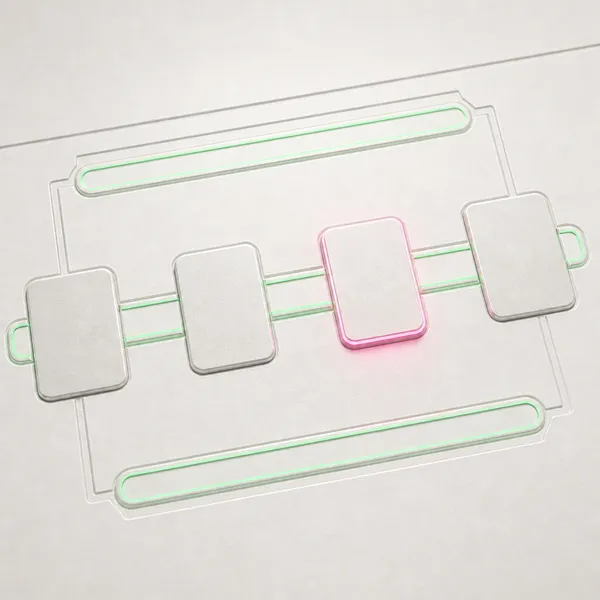
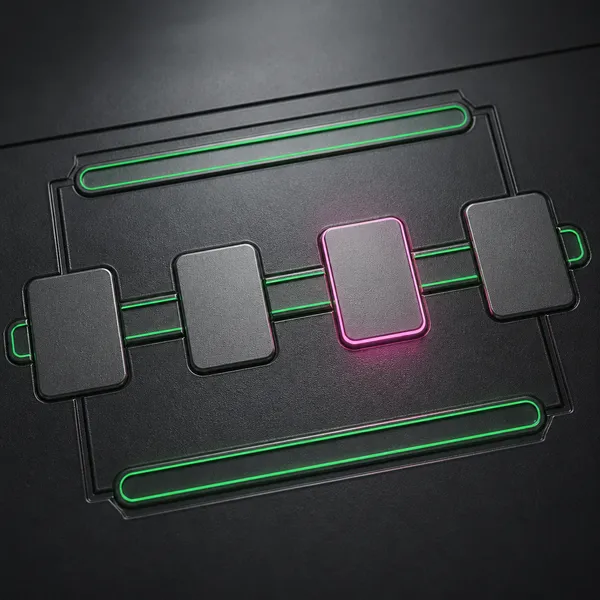
Diagnose
Map what is breaking and where the current system stops connecting.
HOW WE WORK
ENNPHASIS maps the work already happening, chooses or adapts the operating pattern, builds the smallest useful layer and checks the readback before expanding.
METHOD SURFACE
Every engagement moves through visible gates so implementation does not create hidden dependency.
first
bounded
handed over
earned
What cannot be handed over cleanly should not be built yet.
OPERATING VISUAL
The operating method is visible: map the work, pass through controlled gates, apply only after review and read back what changed.
OPERATING METHOD
The same shape sits behind every project. What changes is the build surface, not the contract.
Map what is breaking and where the current system stops connecting.
Choose the smallest useful layer and make ownership, review and no-build boundaries explicit.
Build, test, document and hand over the layer so the next operator can understand it.
Continue only when the previous layer held and the next useful route is visible.
WHERE THE WORK STANDS
The engagement is not a blank slate. There is a platform underneath every project — packaged capabilities with the same operating contract (explainability, reversibility, idempotency, human override). When a capability already covers the work, we activate it inside your engagement instead of rebuilding from zero.
When the work needs something that does not exist in the platform yet, we build it with the same discipline: structured contract, audit gate, reversible apply, owner approval. The new piece becomes part of the substrate. The next engagement inherits it.
This is what makes the difference between consulting hours and operating discipline. The substrate compounds; the engagements stay tight.
PLATFORM CAPABILITIES AVAILABLE TODAY
Three capabilities are packaged and operable today. More are in the runtime and will surface as they reach the same operating contract.
Daily decision loop with rules engine + audit log + human override. Activates inside amazon-management and amazon-audit engagements.
Opportunity queue + refresh queue + brand monitoring. Activates inside geo-content and web-architecture engagements.
Multi-brand Astro kit with structured contracts and audit gates. Activates inside web-architecture, lead-systems and geo-content engagements.
RELATIONSHIP MODEL
The default is async. Day-to-day status, decisions, and deliverables move through a shared workspace — written updates, documents, screen recordings — so the client can check on their own time and the work keeps moving between calls.
Calls happen when the work specifically requires one: a first conversation to scope the project, a decision that needs real-time discussion, a moment of friction that needs to be resolved out loud. Weekly status meetings and "touch base" calls stay off the calendar.
Permissions grow with results, not with calendar time. The first build lands in one part of the operation. If it holds, access widens — another node, another data source, another decision surface. The model is incremental and observable; scale is earned by evidence.
WORKING RULE
Everything else stays unbuilt. The handover defines the build, not the other way around. If a layer cannot be operated by the next person who picks it up, the work is not done — and that constraint shapes scoping from the first conversation.
WHAT DOES NOT HAPPEN HERE
Anti-patterns matter because most of what ends in a failed project comes from one of these three. Stating them up front filters the wrong fit before scoping starts.
Planning is useful when it clarifies what will actually be deployed. Deliverables that exist only on a slide are not the work.
The tool follows the operating need, not the other way around. ENNPHASIS does not build a system around a vendor unless the system genuinely requires it.
What is delivered should not require the original builder to remain available for it to keep working. If the system depends on permanent interpretation, the system is not done.
WHERE THIS ENDS — OR CONTINUES
Some projects end at the diagnosis. Others end after one delivery, with a clean handover. Others continue for years because new systems keep opening — account work that surfaces a content layer, a content layer that surfaces an automation, an automation that surfaces a decision system. The relationship compounds when each layer earns the next.
Closure is a normal phase of the method, not a recovery move. If the work is no longer the right fit, or the next layer needs execution outside this side's scope, the relationship closes openly.
NEXT
Send the current friction. The next step is to decide which layer should exist first and what should not be built yet.
Talk about the systemWe will shape the route: pattern, system review, audit or no-build decision before anything expands.