SERVICE / WEB ARCHITECTURE

Web architecture for sites that need to keep growing cleanly.

Start here when the website already exists but cannot be governed cleanly: pages, articles, languages, internal links, SEO/GEO content and CTAs keep growing without a stable operating layer.

WEB ROUTE

The site becomes a route system people can govern.

This service is for websites that need route ownership, structured page contracts, audit gates and publishing discipline before more content gets added.

What exists

Current pages and content

Marketing pages, CRM fields, exports, blog posts, hubs and lead paths that already carry the business signal.

What drifts

Publishing entropy

Routes overlap, copy fragments across owners, SEO breaks silently and every new section makes the next harder to ship.

Web operating layer

Route map, page contracts, audit gates, readback.

Ennphasis turns the surface into a system: each page type has a job, each change goes through audits, each release is owner-approved.

Owned route system

Structured surfaces

Pages render from structured payloads. SEO, hero, sections and CTAs live in audited contracts.

Readback

Visible publication state

After release, route, output and indexability stay checkable.

VISUAL OPERATIVO

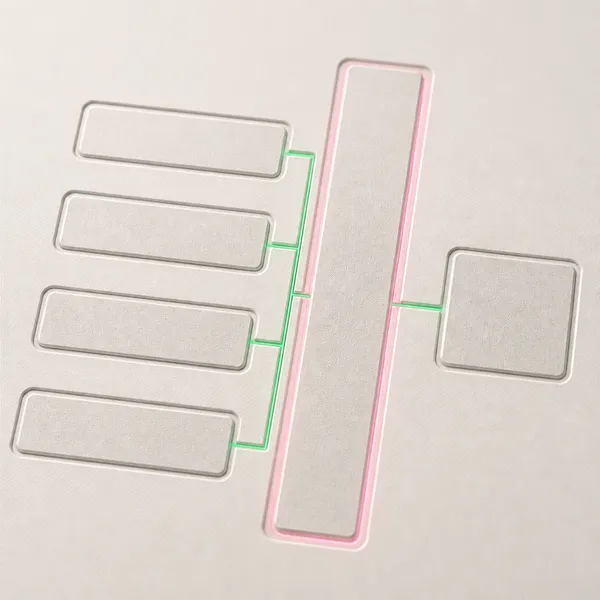
Rutas, secciones y release gates encajan en una misma columna contractual.

La arquitectura web conserva el contrato entre contenido, ruta y publicaci?n para que cada cambio tenga superficie y gate.

  • Contrato de rutas.
  • Gate antes de publicar.
Stack de arquitectura web encajando rutas en una columna de contrato y release

PATTERN-LED ROUTE

Scattered surfaces become a system people can use.

The page starts from real operating knowledge, selects the applicable pattern, then makes the adapted system and readback explicit.

Input source

Existing surface knowledge

Pages, CRM fields, exports, lead paths or content topics are mapped as working assets, not treated as empty inputs.

Pattern ready

Web/data operating pattern

Routes, metadata, gates, ownership and output checks make the surface maintainable.

Output readback

Adapted system surface

The result is a layer that can publish, route, qualify or prepare decisions without constant reinvention.

WEB SURFACE SYSTEM

The site needs a map before it needs more pages.

A programmatic web system says what each page is for, where it lives, how it links, and how new pages are produced — without starting from zero each time.

Route map

Define services, solutions, articles, legal pages, landing pages, and language routes before expanding content. The map exists before pages get written.

Page contracts

Reusable templates and JSON surfaces so similar pages share structure without becoming identical. Each page type carries its own contract.

Publishing rules

Metadata, internal linking, article bodies, sitemap behavior, and future repurposing live in one governed flow — not in scattered editor notes.

ROUTE CONTRACT

La web escala cuando la siguiente pagina no exige una arquitectura nueva.

El bloque reduce la repeticion a un contrato: inventario de rutas, patron de secciones y release gate antes de producir mas superficie publica.

Service route /es/servicios/web-architecture/
Estado de la superficie pilot template
OPERATING CONTEXT The website should know what each route is.

requerido

DECISION POINT Not every website problem needs a visual CMS.

acotado

EVIDENCE BEFORE EXPANSION Before more pages, the site needs an inventory.

listo

Release gate requerido

A website becomes programmatic when the next page can be generated without inventing a new architecture.

WHAT CHANGES IN WEB ARCHITECTURE

What becomes easier to govern.

Routes

Each route has a purpose, a page type, a language, a canonical status, and a defined relation to the rest of the site. No orphan pages, no untracked drift.

Surfaces

Each page is materialized as JSON with hero, sections, SEO, lineage, and a template key. The renderer takes structured data, not free-form input.

Editorial flow

Articles can keep Markdown as long-form body syntax, but the renderer still receives JSON. Editors work in markdown; the system stays governed.

Audit gates

The system checks links, route coverage, lineage, sitemap behavior, active filetypes, and drift on every change. The site catches its own problems.

WEB BUILDER PROOF

The next page should not require a new architecture discussion.

A governed website has page types, route contracts, local assets, internal links and audit gates that make each new surface easier to produce. Similar pages share structure without becoming clones. After handover, the client knows which source owns each surface. Deploy and indexability remain owner decisions — separate from page construction.

SERVICE TEMPLATE

From current site to governed publishing system.

1

Inventory

Audit live pages, planned routes, languages, page types, and outdated surfaces. Read the site as it actually exists, not as the team thinks it exists.

2

Contract

Define templates, metadata, internal linking rules, publishing inputs, and source ownership. Each page type gets its own contract.

3

Renderer

Render from structured data with audit gates in place. The next page goes through the system; no more one-off builds.

RELATED ROUTES

When web architecture touches the wider system.

Automation

For publication flows, content checks, reporting, and operational routing tied to the publishing system.

Ver servicio →

AI systems

For generation, review loops, and structured content support around the editorial flow.

Ver servicio →

Traditional SMEs

For businesses whose web needs to express real operational structure — not a redesigned brochure.

Ver servicio →

FAQ

Common web architecture questions

Is this a CMS build?
No. The goal is a programmatic publishing route with structured data, reusable templates, and audit gates. A large visual CMS usually adds complexity without solving the governance problem.
Can this support SEO and GEO content?
Yes. The point is to make page types, route ownership, internal linking, metadata, and article generation explicit enough to scale safely — including for generative-search citation.
Can the site be regenerated from upstream data?
That is the intended direction. The web builder renders materialized surfaces; the database and content pipeline govern what exists. The site becomes derivable from its source.

Sistemas operativos, no slides.

Cuentanos que esta fallando. Te diremos rapido si el problema es arquitectonico, operativo o de ejecucion.